Thursday, January 27, 2011

Preliminary evaluation


A. High / Low (Wang Youjie / Armentano Marco / Carrera Marta)
SCORE 30/30 / VERY GOOD

B. Hot / Cold (Dai Zhennan / Colia Elisa / Ghigo Francesca)
SCORE 30/30 / VERY GOOD

C. Light / Dark (Lan Qiuying / Gusmerini Valentina / Ninni Alice)
SCORE 30/30 / VERY GOOD

D. Cooked / Raw (Zhou Jingwen / Dal Palù Doriana / Varguarnera Teresa)
SCORE 30/30 /VERY GOOD

E. Straight / Curved (Teng Jiayun / Giannelli Valeria / Cristini Gabriele)
SCORE 30/30 /VERY GOOD

F. Hard / Soft (Zhao Sihan / Morello Desiré / De Paoli Arianna)
SCORE 30/30 / VERY GOOD

G. Wet / Dry (Faccin Cristina / Broccati Alessio Michele / Yuan Jue)
SCORE 30/30 / VERY GOOD

H. Dark / Refractory (Bao Peijin / Besenzon Filippo / Moretto Daniele)
SCORE 30/30 / VERY GOOD

I. Large / Small (Nervo Sara / Nino Maria Paola)
SCORE 30/30/ VERY GOOD

J. Waterproof / Porous (Camia Matteo / Melis Mauro)
SCORE 30/30/ VERY GOOD;

K. Wide / Narrow (Arato Francesca / Takahashi Yoshiomi)
SCORE 30/30/ VERY GOOD

L. Liquid / Solid (Valerio Chiara / Colombo Riccardo)
SCORE 30/30 / VERY GOOD

M. Smooth / Rough (Mazza Eugenio / Feyza Baltaci)
SCORE 30/30 / VERY GOOD not yet perfect

N. Long / Short; (Alessio Riccardo / De Las Heras Ana)
SCORE 30/30 / VERY GOOD

O. Heavy / Light (Vernagallo Sergio / Morales Paula)
SCORE 30/30 / VERY GOOD

P. Full / Empty (Jamehtahaf Aboozar / Frazzetta Giuseppe)
SCORE 30/30 / VERY GOOD

Q. Regular / Irregular (Coletta Paola / Zivanovic Tijana)
SCORE 30/30 / VERY GOOD

R. Resistant / Weak (Larranaga Inigo / Iannuzzi Francesco)
SCORE 30/30 / VERY GOOD

S. Rigid / Flexible (Ruiu Irene / Viberti Andrea)
SCORE 30/30 / VERY GOOD

T. Robust / Fragile (Vanegas Angela / Giulini Serena / Santos Laura)
SCORE 30/30 / VERY GOOD

U. Natural / Artificial (Natalia Moreira / Zappalà Luca)
SCORE 30/30 / VERY GOOD

V. Sharp / Rounded (Pereno Amina / Renò Vittoriano)
SCORE 30/30 / VERY GOOD

W. Transparent / Opaque (Kurishita Takeshi / Giuliano Luca)
SCORE 30/30 / VERY GOOD

X. Fast / Slow (Rosa Cardinal Silvia / Ariano Giacomo)
SCORE 30/30 / VERY GOOD

Y. New / Used (Gerenzani Isabella / Casagranda Marta / Santa Alicia)
SCORE 30/30 / VERY GOOD

Z. Thick / Thin (Curatolo Alessio)
SCORE 30/30 /QUITE GOOD

Wednesday, January 26, 2011

Final Lecture and Blog Review


The Blog Review at the end of the Course will be held on Thursday 27 at 9.30 PM

Tuesday, December 7, 2010

More instructions

Please remind that:

1) the conceptual map must show (with the aid of 5/7 "ideas") the whole system of the leading points of view around the assigned "couple" of material properties.

2) the "ideas" represented in the graph hopefully must belong to the same grammar category (i.e. they can be adjectives, verbs, nouns, etc.)

3) the blog can be completed (but not compulsory) with a short spoken interview (mp3 file of no more than 2 minutes) that syntetizes the blog phylosophy.

Tuesday, November 2, 2010

The Alphabet


A good exercise for walking around the themes of our research is to prepare a simple alphabetical list, like this:

A for Agriculture
B for Botanics
C for Computer Science
D for...

and so on

Useful Web sites for preparing the Alphabet are:
- http://www.crosswordsolver.org/definition
- Freedictionary

Sunday, October 31, 2010

More Lectures

Next lectures will be on:
Tuesday, November 2, 13 PM
Wednesday, November 3, 9 PM

Tuesday, October 26, 2010

Singing characteristics

Songs are important and immediate messages, that refer to the more ancestral times of our history.

An important tank of suggestion is the Music Sheet Levy's Collection

Monday, October 25, 2010

Things & People: an Hyper_Index


Things:
- Bicycles
- Books: 1, 2, 3
- Cars
- Home appliances

People:
- James Joyce
- Claude Lévi-Strauss
- Popeye & Olive Oyl, 1

Places:
- Dubai, 1

waiting for links

Colors


Colors are appearances of life

颜色 (yánsè) is color in Chinese

"COLORS" is the title of a magazine. Visit the site.

Sunday, October 24, 2010

Movies and Material Culture

- The Secret Life of Machines - The Vacuum Cleaner


- Jour de fete (1949), directed by Jacques Tati


- Ten Canoes (2006), Directed by Rolf de Heer and Peter Djigirr


- Les Triplettes de Belleville (2003), directed by Sylvain Chomet


- Steamboat Bill Jr. (1928), directed by Buster Keaton


- Acciaio (1933), directed by Walter Ruttmann

Instructions for Writing the Blog

Each Post must have:

- a Title, with a short phrase for curiosity
- a Picture, for appeal
- a Text, for explanation, but concise
- a set of Labels, for ginving the keys to the argument

List of the Arguments to be contained in the Posts (at least one Post for each):

- The couple of adjectives
- Translation in foreign languages
- Explication of the terms
- Synonyms
- Presence in mythology
- Proverbs and sentences
- Comics citations
- Literature citations
- Movies citations
- Song citations
- Title and book cover presences
- Agricultural vs Industrial Society
- Reference to materials
- Tools
- Measurement tools and units
- Things and objects
- Innovation and patents
- Product advertisement examples
- Time coordinates and chronologies

- A special attention must be paid for the intercultural relationship in order to compare the different points ov view around the central theme examined.

List of some Labels:

- Dictionary
- Literature
- Mythology
- Tales
- Innovation
- Patents
- Comics
- Proverbs
- Visual arts
- Movies
- Songs
- Things
- Places
- History
- Philosophy
- Measure
- Time

The Blog must refer to Things, i.e. material objects, because the focus is the MATERIAL CULTURE and its HISTORY.

The Blog must be interconnected with the others of the Class and with the Web in order to create a real Network

On the blackboard


Thursday, October 21, 2010

Blackboard

Sometimes it is useful to remind what has been written on the blackboard:

Proverbs


Proverbs (谚语 - Yànyǔ) are ...

A proverb is a short well-known expression that states a general truth or gives advice.

Look for them in a web site.

English Proverbs and Sayings.

Chinese proverbs & others.

Sunday, October 17, 2010

Chinese to start


你 好, here you find some interesting videos, available on YouTube:

- Beginner Chinese lesson part 1
- ActiveChinese lesson part 2
- ActiveChinese School Edition: Chinese 100 - In the Classroom

I like Chinese!

and others, good search!

www.zhongwen.com: in this site you find the complete Chinese Characters: A Genealogy and Dictionary published by Yale Press and available at Amazon.

Friday, October 15, 2010

Mythology & Technology


Most of the ancient myths are connected with the great cuktural revolutions and with their embedded technical innovations. Technology is part of the mankind evolution and without it we were not here.

A Web site for Greek Mythology.


Prometheus: the fire discovery
Oedipus and Jocastas of Thebes: the incest taboo
Pasiphae and Minotauros: genetics and technology
Heracles: the ecology challenges
Phaeton: the chariot of the Sun
Icarus: the flight adventure
Dedalus: engineering and architecture
Demeter and Persephone: husbandry innovations
Atalanta and Hyppomenes: the technology illusions
Romulus and Remus: the foundation of the town
Theseus and Ariadne: the intelligent discoveries
Ulysses and the Trojan Horse: technology as stratagem

James George Frazer, The Golden Bough, 1890-1915.

Chinese words #5
Mythology = 神话 (shénhuà)
神 (shén) = supernatural
话 (huà) = words

Literature Classics


The Literature Classics
http://classics.mit.edu/Browse/index.html

Free E-Books by Planet PDF
http://www.planetpdf.com/free_pdf_ebooks.asp

Planet E-Books
http://www.planetebook.com/

The Odyssey by Homer
http://classics.mit.edu/Homer/odyssey.html
http://www.planetpdf.com/free_pdf_ebooks.asp

The Iliad by Homer
http://classics.mit.edu/Homer/iliad.html
http://www.planetpdf.com/planetpdf/pdfs/free_ebooks/The_Iliad_NT.pdf

The Aeneid by Vergil
http://classics.mit.edu/Virgil/aeneid.html

The Analects by Confucius
http://classics.mit.edu/Confucius/analects.html

The Doctrine of the Mean by Confucius
http://classics.mit.edu/Confucius/doctmean.html

The Tao-te Ching by Lao-Tzu
http://classics.mit.edu/Lao/taote.1.1.html

The Fables by Aesop
http://www.planetpdf.com/planetpdf/pdfs/free_ebooks/Aesops_Fables_NT.pdf

Utopia by Thomas More
http://www.planetpdf.com/planetpdf/pdfs/free_ebooks/Utopia_NT.pdf

Alice's Adventures in Wonderland by Lewis Carroll
http://www.planetpdf.com/planetpdf/pdfs/free_ebooks/Alices_Adventures_in_Wonderland_NT.pdf

Moby Dick by Herman Melville
http://www.planetpdf.com/planetpdf/pdfs/free_ebooks/Moby_Dick_NT.pdf

Ulysses by James Joyce
http://www.planetpdf.com/planetpdf/pdfs/free_ebooks/Ulysses_NT.pdf

Wednesday, October 13, 2010

Ingenium - Engien - Engine


Machina is an artifact that operates against the nature. It is the Latin translation of the ancient Greek word mêchanê.
"Deus ex machina" is a device that - in Greek theatre - allows the Gods to enter on the scene of the human life.
Machina in Ancient World assumes a negative value (as the war machines, as the Trojan Horse).

Only in more modern times the word machine (macchina, in Italian) assumed a neutral value, as a synonim of engine.

Ingenium is the useful invention of a device that helps performing some action.
Engien is the ancient French word that translated this concept in the Middle Age, hence the English engine.

Engineer (and the Italian word ingegnere) come from the Latin word ingenium.

Tuesday, October 12, 2010

Silkworms


The Life cycle of a silkworm.

Chinese words# 4:
Silk = 丝绸 (sīchóu)
Thread = 丝 (sī)

The Secret Life of Machines


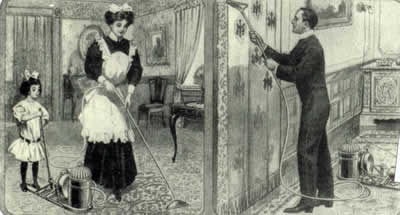
The Vacuum Cleaner on YouTube:
Part one
Part two

The History of Vacuum Cleaners.

Chinese words # 3:
Vacuum cleaner = 吸尘器 (Xīchénqì) i.e. "absorb dust device"

To do


In Ancient Greek the verb "poiéin" (to do) had a more precise meaning: molding clay.

Poiéin is the creative action of God who create the mankind from the mud. Poiéin is the act of giving a shape to the formless matter.

Poiéin is the root for pòiesis, that origins "poetry", "poem" etc. that are artifacts of a creative activity.

The Latin word ars is the translation of the Greek techné: art, technique (and technology) have the same basic meaning, dealing with the production of things.

Chinese words # 2:
to do = 做 (zuò)